
September 1970 · Vol. 4 No. 11
September 1970 Magazine (Vol. 4 No. 11)
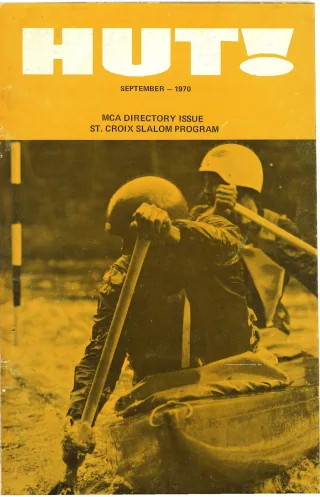
Magazine · 24 pages
Search this issue
For the full-resolution original, use Open PDF above. Your browser handles PDF zoom and navigation.
Searchable text for scan page 9
from the DITOR
“Numerous acentury ago, this race may now survive in only five
places , including the Udjong Kulon Reserve (where the last popula-
tion estimate was nine) and the Betiri Reserve... (five). Though
shooting permits have been required in Java since 1940, uncontrolled
hunting has brought this tiger and the Javan rhinocerous to the most
perilous state..."--James Fisher in Wildlife in Danger.
"The big cats will never be eradicated by man," you may have
thought, but onthe contrary, the big cats are in big trouble as are
a vast number of species on this planet. No canoeist needs to be
told that the presence of man has a devastating influence on wild-
life. Hunting andthe destruction of habitat are the worst problems
we face. Introduction of animals to a new area has also been the
cause of wildlife destruction. Manis sodestructive that the list
of endangered species is growing at a rapid rate.
It is estimated that 76 percent of the extinct birds and 67 per-
cent of the extinct mammals were lost because ofman. The year 1600
is usually taken as the point where manhas begun his destruction of
fauna. In 1600 there were about 4,226 living species of mammals.
Thirty-six percent of those have become extinct and 128 are in dan-
ger of extinction. In 1600 there were 8,684 living species of birds;
94 are now extinct and 187 are near extinction. Alan Solem of the
Field Museum of Natural History of Chicago states that "...man has
wiped out 10,000 species of insects and snails in-the last 200 years."
It is probable that the coming years will showus more problems.
Some species of mouse have become extinct because a developer has
simply plowed under their entire population. Some species of prairie
grasses are virtually extinct because the prairie has been converted
to farm land--but the DDT residues are a more complex problem. It
will take more than effort to save our birds of prey. It seems prob-
able that we will lose a great many battles to save endangered
species because we willbe too late. A single natural disaster will
be sufficient to wipe out the whooping crane, no matter what its
numbers, because of the limited habitat.
Species have always become extinct. Sometimes an ice age may
have beenthe cause. More oftenitis another species which becomes
better adapted tothe environment and evolves as the dominant form.
The extinction of man would not be a catastrophe in the natural
sense. Many new forms would replace those we have destroyed and in
a million years there would benotrace. The extinction of man would
be a blessing with regard to life as a whole because, although we
will soon have the ability to control life genetically, we threaten
to put so much long range radioactivity into the earth that life
could not maintain an undisturbed reproductive cycle and might mu-
tate rampantly.
Alan Solem writes of his study of land snails: The island snails
I now study are vanishing rapidly. Saving themis not possible..."
Unlimited money, help, and cooperation would not be sufficient to
reverse the trends. So I collect and I study. When I can, I help
efforts to save natural areas and preserve endangered species. This
still is little compared with the need."
Article contents & approved summaries (0)
No article summaries are available for this view.