Articles (17) · Summaries (17)
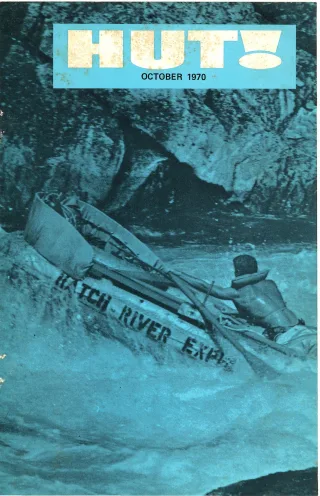
Generated issue overview: October 1970 issue of HUT!, published by the Minnesota Canoe Association. The issue includes canoeing and conservation features, club election coverage, race reports, cruising accounts, a book review, and camp-cookery material.
Generated summaries are descriptions, not original captured text. Page-range text shows complete scan pages and may include neighboring material.
Please Read This!
Title transcribed from original publication
Generated summary: Discusses MCA membership dues and rising costs, including HUT! production and mailing expenses. Howe asks members to weigh the organization’s direction and a proposed change to how dues are set.
Open scan page 4
Read captured page 4 →
From the Editor
Title transcribed from original publication
Generated summary: The departing editor reflects on canoe sail rigs and describes how canoe designs on Lake Minnetonka developed into fast racing sloops.
Open scan page 5
Read captured page 5 →
Annual Banquet To Feature Speaker Who Survived Raft Trip
Title transcribed from original publication
Generated summary: Previews a banquet program featuring Dennis Halvorson’s account and slides from a raft journey on the Napo River toward the Amazon basin, along with a musical performance and canoe raffle.
Open scan page 6
Read captured page 6 →
Hunters Are Conservationists, Too
Title transcribed from original publication
Generated summary: Argues that hunters contribute to conservation through habitat restoration, license fees, and support for conservation measures, while calling for sound practices that benefit wildlife.
Open scan page 7
Read captured page 7 →
Ed Chute Goes From Hut! To Yale
Title transcribed from original publication
Generated summary: Profiles departing HUT! editor Ed Chute, describing his canoeing, sailing, school, volunteer hospital, and academic activities.
Open scan page 8
Read captured page 8 →
MCA Annual Election: Nominees Make Strong Bids
Title transcribed from original publication
Generated summary: Presents candidate profiles and statements for MCA offices and director positions, including candidates’ experience, interests, and goals for the organization.
Open scan page 9
Read captured pages 9–13 →
Pro Racing: Minnesota
Title transcribed from original publication
Generated summary: Reports on Minnesota professional canoe teams competing in the Quebec race circuit, describing the Sorel race, Mont-Laurier race, and International Canoe Classic.
Open scan page 15
Read captured page 15 →
Head and Anderson—and You—are Planning the Future
Title transcribed from original publication
Generated summary: Compares gubernatorial candidates Doug Head and Wendell Anderson on environmental issues and argues that voters and organizations must press candidates to follow through on their promises.
Open scan page 18
Read captured pages 18–20 →
1970 St. Croix Slalom Reveals Increased Skill
Title transcribed from original publication
Generated summary: Reports improved stability, maneuvering, and performance among paddlers at the St. Croix Whitewater Slalom at Taylor’s Falls, with observations about contestants and spectators.
Open scan page 23
Read captured page 23 →
Whitewater Rafting: An Increasingly Popular Sport
Title transcribed from original publication
Generated summary: Describes commercial rafting trips on western rivers and the author’s Selway River trip, including the wilderness setting, rapids, and support provided by outfitters.
Open scan page 25
Read captured page 25 →
More Rivers For Canoeing?
Title transcribed from original publication
Generated summary: Summarizes a meeting discussion about exploring and developing Minnesota rivers, cleaning waterways, legislative advocacy, river access, and reporting river conditions.
Open scan page 26
Read captured page 26 →
Flambeau Frolics
Title transcribed from original publication
Generated summary: Recounts an autumn MCA cruise on the Flambeau River, including the group’s campsite, rapids, encounter with a snowmobile club’s river gathering, and shared meal.
Open scan page 27
Read captured page 27 →
August On The Yellow
Title transcribed from original publication
Generated summary: Describes a leisurely August canoe trip on a sixteen-mile stretch of Wisconsin’s Yellow River, noting route details, vegetation, wildlife, and a shuttle method.
Open scan page 28
Read captured pages 28–29 →
Book Review
Title transcribed from original publication
Generated summary: Reviews Bill Riviere’s guide to canoeing and Grace Lee Nute’s history of the Voyageur trails along Minnesota’s Border Country.
Open scan page 30
Read captured page 30 →
Deer Hunting By Canoe
Title transcribed from original publication
Generated summary: Describes methods and safety considerations for hunting deer from a drifting canoe, based on an experienced hunter’s practices.
Open scan page 31
Read captured page 31 →
The Wayward Wind (5th in a series)
Title transcribed from original publication
Generated summary: Reflects on friendships formed during Quetico wilderness trips, using stories of past companions, portages, challenging weather, and shared camp experiences.
Open scan page 32
Read captured pages 32–33 →
Camp Cookery
Title transcribed from original publication
Generated summary: Provides instructions for steaming bread outdoors and a recipe for steamed brown bread, including cooking time and preparation steps.
Open scan page 34
Read captured page 34 →