
April 1971 · Vol. 5 No. 5
April 1971 Magazine (Vol. 5 No. 5)
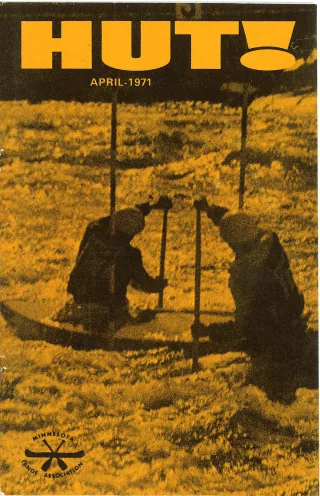
Magazine · 24 pages
Search this issue
April 1971 Magazine (Vol. 5 No. 5)
Captured text — scan page 16
Automatically captured text may contain recognition errors. Compare it with the original scan.
is a disadvantage here).
Flood Pred icti on S Another danger is the logjam. To avoid
these, get out of the boat a split second before
F] ash Warnings colliding, climb the obstacle if possible. Al-
ternatively roll over low logs sideways — though
to Canoeists cues
It is wise to avoid such situations in the first
place through foresight and forethought rather
than forfeiture!
The chance of a knockout is best met with
proper headgear; hypothermia (subnormal body
temperature), with a wet suit.
Frequent causes for going down the drain
are: too much gall, hesitation, distraction,
hangover, showmanship, shortsightedness, poor
paddling technique, lack of river reading ex-
perience (the ability to judge currents) and lack
of conditioning. The most frequent victims are,
therefore, the Sunday afternoon paddlers.
Swimming in whitewater should be prac-
ticed. It lends self-confidence and helps over-
come surprises when meeting with actual ex-
should not boat in treacherous, swift-moving treme situations. Near shallow water swim on
current. After surveying the scene, a good rule Your back, feet downstream; at least you avoid
of thumb all boaters should adhere'to ise When knee injuries. Through rollers dive stretched
in doubt, don’t. (A moment’s hesitation on out, head downstream an d on your belly.
land is worth two in the water.) Always get a lungful of air before hitting big
We are proud of the fact that the MCA hasa Waves. Breathe through a pointed mouth, like
high safety record: no deaths or serious injuries under a shower; you will swallow less water
to members while canoeing — to our know- that way. :
ledge. To reinforce our concern for preserving Whenever possible, hold on to your boat,
you, we are reprinting two articles on safety in and keep it downstream from yous ert
whitewater (see following). Since most cruising Water, head for shore by pushing off bottom
rivers are at least sprinkled with whitewater, with your feet, rather than by SWINHEDE: it is
many of the points are applicable to cruisers as also necessary to look for and anticipate down-
well as whitewater paddlers. Read — and heed. aireaia obstacles and ancy places. iG
The outside shore of a curve in the river is
easier to reach than the inside one, but be
PROB L E MS | N prepared for a crash landing. Give yourself
more scope and a chance to hold onto some-
WH IT EWATE R thing by letting go of your boat’s hand sling,
by Alf Gaensbauer and holding the end of the 15-foot boatline
instead. In very fast knee-deep water, it is easier
This article is reprinted from The Water Bubble, A P
sees a to run with leaping strides than to wade slowly.
the monthly publication of the British Colum- Any swimmer who is not already exhausted or
bia Kayak and Canoe Club, Vancouver.
frightened to death should let go of the towing
We generally run into problems for two boat temporarily, rather than cause his rescuer
reasons: poor equipment and misconduct. Un- to capsize in apparently awkward situations.
solved problems can lead to loss of boat and The salvage of a boat without swimmer is
life. Drowning can usually be avoided by best accomplished by having a short (2-foot)
swimming; nonswimmers have no business pad- line attached around the rescue boat’s cockpit
Several communities have been warned to
prepare for severe and possibly record floods
this spring. Heavy snow cover in the Upper
Mississippi basin will probably produce near-
record crests along some areas of the Mississippi
River and its main tributaries in Wisconsin: the
Chippewa, Trempealeau, Black and Wisconsin
Rivers. Even greater flooding may occur on the
Root and Zumbro Rivers in southeastern Min-
nesota and the’ Upper Iowa River in north-
eastern Iowa.
Of more immediate concern to canoeists
who do not live in these areas should be
insistence on canoeing safety on any high and,
hence, tumultuous water. Now, more than at
any other time of the year, nonswimmers
dling. with a snap-hook on its end, to snap onto the
When a swimmer drowns it is because he capsized boat’s handsling.
gets caught under water or he quits swimming It seems obvious that all such basic know-
because of exhaustion, hypothermia or knock- ledge and advice, as mentioned above, gained
out. through the experience of many seasoned pad-
Most common dangers are: big rollers, back- _dlers, will be of value especially to the beginner,
water under wiers*, underwashed shorelines if he only would learn about it. It is the trip
and whirlpools in big waves. Effective remedies _leader’s responsibility that paddlers in his group
are: diving deep and downstream; diving deep know at least about rescue procedures before
. and to the outside in whirlpools (the lifejacket they hit the water.
*dams
12 HUT! — APRIL, 1971
Article contents & approved summaries (0)
No article summaries are available for this view.