
May 1969 · Vol. 3 No. 7
May 1969 Magazine (Vol. 3 No. 7)
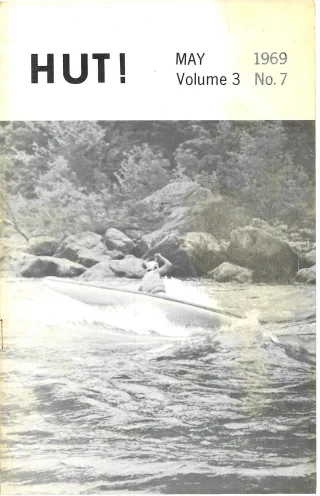
Magazine · 24 pages
Search this issue
May 1969 Magazine (Vol. 3 No. 7)
Captured text — scan page 15
Automatically captured text may contain recognition errors. Compare it with the original scan.
being physically hard, but even more mentally strain-
ing because I had to force myself to do a little more
when nobody else could. As time went on the brigade
accepted more challenges and became more positive of
its capabilities.
Personal relation and respect were a very important
part of the ten days at base camp. In each brigade
there were kids from all types of homes and back-
grounds. We worked and lived together on equal terms
and didn't bother to consider where the other fellow
hailed from. When we would have difficulties with
one another it was never in terms of "that nigger" or
"that rich kid". Instead, when someone made a mis-—
take it was an individual that did it not a race or
class of people. JI cannot consider that negros are
bad or slum persons are not worthy citizens, I think
of them only as the individuals they are.
At the conclusion of ten days in base camp, the bri-
gade elected two student leaders, of which I was one.
My responsibility was to lead five guys on a ten mile
trek through the woods. We were directed only by a
compass and the fundamentals taught us. Each of us
carried thirty pounds on our backs and our goal was
to arrive safely in the designated location.
I don't know if it was the swampy terrain or the fact
that we were on our own that caused things to go as
they did, but whatever it was, the going was very hard.
During lunch break, two guys started running ahead and
a little later somebody thought we were lost and going
in the wrong direction. These were problems, probably
the first real problems we had faced together. These
were bad things to experience, especially for me be-
cause I felt responsible for the rest of the guys.
It was one of those things that at first you would
like to quit, but realize that you have a goal and
must move on. This, then, was a challenge that we had
to meet and overcome together, which was the philo-
sophy taught us during base camp.
The second half of the course was the expedition
through Quetico. The trip lasted for ten days during
which time we averaged thirty-five to fifty miles a
day in canoes.
I remember the expedition as being very hard work.
I don't recall the long sunsets or the good fishing
we had. Working hard both mentally and physically,
each of us had a load to carry and a job to do and
we were expected to do it. Often we were challenged
to use the knowledge learned in base camp. There was
MINNESOTA
OUTWARD BOUND
1 3 TO SERVE. TO STRIVE AND NOT TO YIELD
Article contents & approved summaries (0)
No article summaries are available for this view.