
November 1969 · Vol. 4 No. 1
November 1969 Magazine (Vol. 4 No. 1)
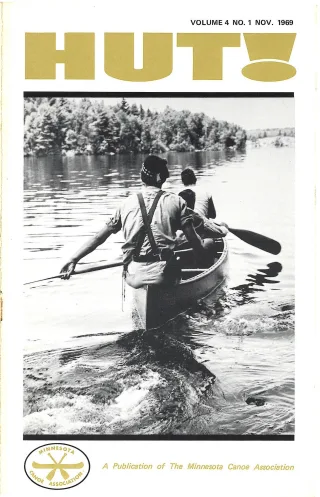
Magazine · 20 pages
Search this issue
For the full-resolution original, use Open PDF above. Your browser handles PDF zoom and navigation.
Searchable text for scan page 7
CONSERVATION
IMPORTANCE OF SAVING MINNESOTA'S CANOE COUNTRY
The unspoiled natural beauty of the Boundary Waters Canoe
Area in northeastern Minnesota is being threatened by pros-
pectors who are seeking evidence of economically exploitable
minerals, primarily nickel and copper.
The canoe area, most of which is in the Superior National
Forest, is the only middlewestern area preserved under the
1964 Wilderness Act. Combined with adjoining Quetico Pro-
vincial Park in Canada, the region is the largest such rac-
reational area in the world.
The area covers more than a million acres of interlocking
lakes, rivers and forest lands. Most of it is easily acces-
sible only by canoe. The area reported 700,000 visitor-
days last season. This pine and water land should not be
defaced by the scars of mining operations and the pollu-
tion, roads, roar of engines and commercial activity which
they would bring. No mineral is worth such exploitation.
The prospecting venture shows a defect in the 1964 Wildcr-
ness Act. The act is designed to preserve more than 1. mil-
lion acres of public land in a wild, unspoiled condition.
Conservationists sought to prohibit all new mineral opera-
tions immediately. This was opposed by Western mining in-
terests. A compromise permits new mineral leases to be
granted and new mining claims filed through Dec. 31, 198%.
After that, there is a ban on new mining.
The government has acquired only surface rights on land in
the canoe area. The prospecting is being undertaken by a
New York businessman. G. W. St. Clair, who owns mineral
rights on about 128,000 acres and has contracted with other
mineral-rights holders to explore another 192,000 acres.
The status of these mineral rights, if valuable deposits are
found, is confused. The courts generally have ruled that
the holder of mineral rights has the right to use the land
surface as necessary to extract any mineral deposits. liow-
ever, the mineral leasing act, which controls oil, gas and
certain other minerals on federal lands, provides that the
issuance of new leases is discretionary with the Sccretary
of Interior. In the past, the secretary has refused to is-
sue mineral leases on wild forest lands.
4
Article contents & approved summaries (0)
No article summaries are available for this view.