← Back to The HUT

June 1985 · Vol. 21 No. 6

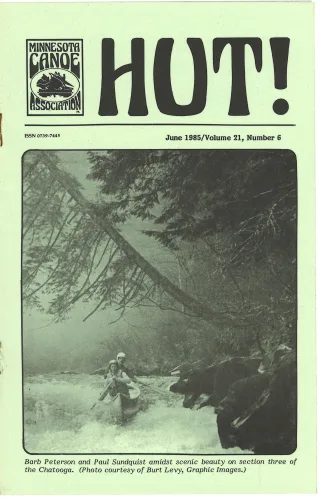
June 1985 Magazine (Vol. 21 No. 6)

Issue first-page cover

Magazine · 40 pages

June 1985 Magazine (Vol. 21 No. 6)

Captured text — scan page 34

Automatically captured text may contain recognition errors. Compare it with the original scan.

This shows the complete scan page, including any other material on it.

GRINDING CLIFF'S AXE

In the last two issues of HUT! readers have been treated to a couple of
pieces by Cliff Jacobson extolling the virtues of hand axes, bright colored
camping gear, and other paraphernalia from the history of camping manuals.
One thing is for sure, after reading those articles I am convinced that Cliff
is opinionated! However, in my opinion he misrepresents the issues, offers
feeble excuses for his opinions, and does an injustice to the new BWCAW
User Education Program. The majority of the group working on the BWCAW
User Education Program is proposing that the use of hand axes and brightly
eolored camping gear be discouraged. Here's why.

Visitor use of the BWCAW has skyrocketed in the last 20 years. The
sheer numbers of visitors cause significant environmental deterioration to
the resource, and the campsites and portages show the signs of overuse and
abuse. There is no question but that the improper use of hand axes is a
major source of vandalism and damage to the wilderness. Virtually all
campsites on regularly used routes show the sears of idiots who wantonly
hack away at trees that are hundreds of years old.

The percentage of users who intentionally vandalize the BWCA, when
combined with those who unintentionally damage this resource, is enough to
produce pervasive and long-lasting effects. While it can be argued that
people—not hand axes—destroy wilderness, there's no question but that
without an axe, hackers are reduced to their bare hands. The wilderness is
much more likely to survive this menace.

Cliff's justifications for bringing a hand axe are hard to swallow. Hand
axes are about as useful on a wilderness canoe trip as your grandmother's
girdle—any competent outdoorsperson will tell you that. Cliff's characteri-
zations of those who wish to discourage axe use as "desk-bound environmen-
talists" is unfair and unfounded. Here are the facts.

If you are dependent upon a hand axe to start a fire in the wilderness,
you do not belong in the woods. I've been on over 50 extended BWCAW and
Ontario canoe trips (most with physically disabled persons), plus a couple of
trips to the Yukon, the Wind River Range, and one to the Andes in Peru. I've
never brought an axe, I've always been able to start a fire, and my
experience is hardly unique. Virtually every other major outdoor program
that I know of (including Outward Bound, the YMCA's, the National Outdoor
Leadership School, and dozens of others) have policies discouraging the use
of axes.

If you are competent you should always know where to find dry tinder.
If you understand the basic principles of fire starting—fuel, oxygen, and
heat—there's no reason why you shouldn't be able to start a fire, even after
a week-long rain. In a pinch, a candle or fire-ribbon will get anything
started. Sorry Cliff, but an axe simply isn't necessary.

In the April issue of HUT! Cliff suggests that a hand axe is a vital tool
for pounding tent stakes—phooey! The heel of your boot or a good rock work
equally well. In the second article Cliff paints the scenario of the camper in
' a program that only brings jeans, proceeds to get them wet, and is dependent
upon a hand axe to get a fire started for survival. Phooey again! Any
competent outdoor leader would never let a kid get away with just bringing
-jeans in the first place—that's irresponsible. Wool clothes and good rain
suits are essential on any trip to the BWCAW.

I haven't even mentioned the facts that hand axes are heavy and
account for many serious accidents in the wilderness. Those are the facts,
just ask the Forest Service for the numbers.

HUT! 34

Articles (12) · Summaries (12)

Generated issue overview: June 1985 issue of HUT!, the monthly newsletter of the Minnesota Canoe Association. The issue includes canoeing trip reports, MCA columns, wilderness-use commentary, chapter news, and convention information.

Generated summaries are descriptions, not original captured text. Page-range text shows complete scan pages and may include neighboring material.

From the Bow

Title transcribed from original publication

Generated summary: A column on canoe-building tools and filler, followed by advice about axes and brightly colored equipment in the Boundary Waters Canoe Area. The author argues that most BWCA visitors can leave hand axes at home and rely on a small saw.

Open scan page 4

Read captured page 4 →

From the Stern

Title transcribed from original publication

Generated summary: The editor explains why recent letters and differing opinions about wilderness practices were published, and asks members to help with HUT! writing, planning, and production.

Open scan page 5

Read captured page 5 →

St. Cloud Canoe Club

Title transcribed from original publication

Generated summary: A first-person account of the St. Cloud club's first official 1985 trip, from Little Rock Lake through a channel to the Mississippi River, including the wind, boats, lunch stop, and challenging current near Sartell dam.

Open scan page 9

Read captured page 9 →

Down South

Title transcribed from original publication

Generated summary: A Rapid Riders group's ten-day whitewater trip in the southeastern United States, describing runs on rivers including the Nantahala, Ocoee, French Broad, Chattooga, and Nolichucky, along with the group's experiences and mishaps.

Open scan page 11

Read captured pages 11–12 →

The Duluth Traveler

Title transcribed from original publication

Generated summary: A Twin Ports chapter newsletter report on recent spring paddling trips and the chapter's upcoming canoe convention at Lake Nebagamon.

Open scan page 13

Read captured page 13 →

Who Are We?

Title transcribed from original publication

Generated summary: An introduction to the Twin Ports Chapter: its history, organization, trip program, range of paddling activities, welcome for beginners, and relationship with the MCA.

Open scan page 14

Read captured page 14 →

Cruising Etiquette

Title transcribed from original publication

Generated summary: Guidance for cruise leaders and participants on contacting the leader, honestly assessing skill and equipment, organizing shuttles, preparing before launch, and keeping groups together on the river.

Open scan page 16

Read captured page 16 →

1st Annual MCA Canoe Convention to Be Held June 7, 8 and 9

Title transcribed from original publication

Generated summary: An invitation and overview of the first annual MCA Canoe Convention at the Superior-Douglas County YMCA camp on Lake Nebagamon, describing lodging, meals, paddling, classes, and other activities.

Open scan page 24

Read captured page 24 →

BWCA User Education Program

Title transcribed from original publication

Generated summary: Forest Service staff explain the BWCA user education program's aims of reducing campsite damage and promoting considerate wilderness use. They discuss axes, trip preparation, clothing, equipment colors, and map-and-compass skills in response to prior HUT! commentary.

Open scan page 32

Read captured pages 32–33 →

Grinding Cliff's Axe

Title transcribed from original publication

Generated summary: A response to Cliff Jacobson's views on hand axes and camping gear. The author argues that axes are unnecessary and can contribute to wilderness damage, supports discouraging their use, and calls for education to reduce human impact on the BWCAW.

Open scan page 34

Read captured pages 34–35 →

Conservation Notes

Title transcribed from original publication

Generated summary: A reflection on differing opinions about wilderness practices, arguing that people should use equipment responsibly and remain aware of their impact on wilderness areas.

Open scan page 36

Read captured page 36 →

The Ecologist's Niche: Wildlife Profiles

Title transcribed from original publication

Generated summary: A wildlife profile of the common loon, covering its appearance, calls, adaptations, nesting, diet, and the importance of observing nesting birds without disturbing them.

Open scan page 37

Read captured page 37 →