← Back to The HUT

June 1985 · Vol. 21 No. 6

June 1985 Magazine (Vol. 21 No. 6)

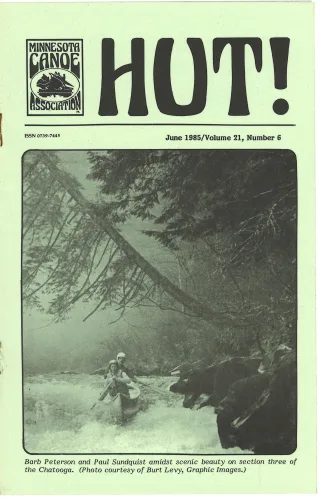
Issue first-page cover

Magazine · 40 pages

June 1985 Magazine (Vol. 21 No. 6)

Captured text — scan page 37

Automatically captured text may contain recognition errors. Compare it with the original scan.

. (JOHN, THIS IS A REPEAT OF AN ARTICLE YOU GOT LAST MONTH
THAT YOU DIDN"T RUN.)

THE ECOLOGIST'S NICHE
Wildlife Profiles

The common loon (scientific name: Gavia immer) is a goose-sized,
heavy, long bodied water bird. It has a thick pointed bill and, in summer, a
black head and neck with a white collar, and a black back with white spots.
The common loon is the state bird of Minnesota. If you have visited
northern Minnesota or Wisconsin, chances are you have seen and heard this
handsome bird. The call of the common loon is hard to describe, but easy to
recognize. It has been described as a maniacal laugh, a mournful yodel, wild
howls, wails, and other such things. Use whatever adjectives you wish to
describe its call, but you will probably always remember it.

Technically, the common loon is a member of the Order Gaviiformes,
Family Gaviidae. Other members include the yellow-billed loon, the arctic
loon, and the red-throated loon. These other loons nest in the northern
tundra regions of North America. The red-throated loon migrates through
Minnesota, the others do not.

Loons are specially adapted for swimming and diving. Loons have been
caught in nets up to 200 feet deep. Truly expert divers. Strong legs, placed
at the rear of the body, give extra leverage to the webbed feet. The
position of the legs makes for powerful swimming, but inefficient walking.
Loons travel on land with difficulty; they don't walk well, but rather push
themselves along on their breast. Loons come ashore only to breed and nest,
so walking is not too essential for them.

Loons nest as close to water as possible. The nest is often con-
tinuously wet. Adults add vegetation to the nest as incubation progresses,
producing a mass of vegetation that may be two feet across or bigger. Two
eggs are usually laid, though one egg is common as well. Rarely three eggs
will be laid. Eggs are oval, slightly glossy, greenish or brownish olive,
usually with brown or black spots or blotches. Unless frightened by an
intruder, one bird attends the eggs at all times. Incubation is done by both
parents, though mostly by the female. When disturbed, the bird will slip off
the nest and dive, surfacing several yards away. It is important not to
disturb birds while they are nesting. Prolonged distractions may result in
the death of the eggs and the failure of the nest. Always observe nesting
birds from a respectful distance, then you ean enjoy watching the chicks
grow all summer long. Small chicks may be hard to spot. If you have
trouble, look at the back of one of the parents. Often the chick will be
hitching a ride, nestled safely between the wings of mom or dad.

The principal food of loons is fish, but they will also consume shellfish,
frogs, aquatic insects, and some vegetation. Loons have been known to get
eaught on fish hooks. Be careful of your casts when fishing near loons.

Loons are excellent swimmers and divers, but they can be run to
exhaustion if disturbed too heavily or if chased. Chasing loons is just not
acceptable behavior, and should be discouraged when observed.

The loon is a beautiful part of the northland. To many of us they are
one of the symbols of the quiet and peace of the wilderness. If we all use
eare and respect when observing loons, we can help ensure that we will be
able to hear the call of the loon over our waters for years to come. — John
Nosek, Conservation

HUT! 37

Articles (12) · Summaries (12)

Generated issue overview: June 1985 issue of HUT!, the monthly newsletter of the Minnesota Canoe Association. The issue includes canoeing trip reports, MCA columns, wilderness-use commentary, chapter news, and convention information.

Generated summaries are descriptions, not original captured text. Page-range text shows complete scan pages and may include neighboring material.

From the Bow

Title transcribed from original publication

Generated summary: A column on canoe-building tools and filler, followed by advice about axes and brightly colored equipment in the Boundary Waters Canoe Area. The author argues that most BWCA visitors can leave hand axes at home and rely on a small saw.

Open scan page 4

Read captured page 4 →

From the Stern

Title transcribed from original publication

Generated summary: The editor explains why recent letters and differing opinions about wilderness practices were published, and asks members to help with HUT! writing, planning, and production.

Open scan page 5

Read captured page 5 →

St. Cloud Canoe Club

Title transcribed from original publication

Generated summary: A first-person account of the St. Cloud club's first official 1985 trip, from Little Rock Lake through a channel to the Mississippi River, including the wind, boats, lunch stop, and challenging current near Sartell dam.

Open scan page 9

Read captured page 9 →

Down South

Title transcribed from original publication

Generated summary: A Rapid Riders group's ten-day whitewater trip in the southeastern United States, describing runs on rivers including the Nantahala, Ocoee, French Broad, Chattooga, and Nolichucky, along with the group's experiences and mishaps.

Open scan page 11

Read captured pages 11–12 →

The Duluth Traveler

Title transcribed from original publication

Generated summary: A Twin Ports chapter newsletter report on recent spring paddling trips and the chapter's upcoming canoe convention at Lake Nebagamon.

Open scan page 13

Read captured page 13 →

Who Are We?

Title transcribed from original publication

Generated summary: An introduction to the Twin Ports Chapter: its history, organization, trip program, range of paddling activities, welcome for beginners, and relationship with the MCA.

Open scan page 14

Read captured page 14 →

Cruising Etiquette

Title transcribed from original publication

Generated summary: Guidance for cruise leaders and participants on contacting the leader, honestly assessing skill and equipment, organizing shuttles, preparing before launch, and keeping groups together on the river.

Open scan page 16

Read captured page 16 →

1st Annual MCA Canoe Convention to Be Held June 7, 8 and 9

Title transcribed from original publication

Generated summary: An invitation and overview of the first annual MCA Canoe Convention at the Superior-Douglas County YMCA camp on Lake Nebagamon, describing lodging, meals, paddling, classes, and other activities.

Open scan page 24

Read captured page 24 →

BWCA User Education Program

Title transcribed from original publication

Generated summary: Forest Service staff explain the BWCA user education program's aims of reducing campsite damage and promoting considerate wilderness use. They discuss axes, trip preparation, clothing, equipment colors, and map-and-compass skills in response to prior HUT! commentary.

Open scan page 32

Read captured pages 32–33 →

Grinding Cliff's Axe

Title transcribed from original publication

Generated summary: A response to Cliff Jacobson's views on hand axes and camping gear. The author argues that axes are unnecessary and can contribute to wilderness damage, supports discouraging their use, and calls for education to reduce human impact on the BWCAW.

Open scan page 34

Read captured pages 34–35 →

Conservation Notes

Title transcribed from original publication

Generated summary: A reflection on differing opinions about wilderness practices, arguing that people should use equipment responsibly and remain aware of their impact on wilderness areas.

Open scan page 36

Read captured page 36 →

The Ecologist's Niche: Wildlife Profiles

Title transcribed from original publication

Generated summary: A wildlife profile of the common loon, covering its appearance, calls, adaptations, nesting, diet, and the importance of observing nesting birds without disturbing them.

Open scan page 37

Read captured page 37 →