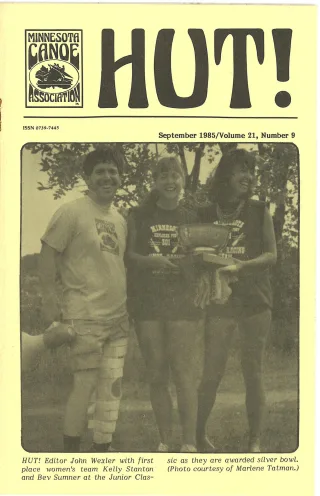
Automatically captured text may contain recognition errors. Compare it with the original scan.
This shows the complete scan page, including any other material on it.
Newsletter of the Whitewater Canoe and Kayak Chapter
Membership: Paul Rem, (612) 645-3538
Safety/Education: Burt Levy, (612) 729-8874
Liaison to the MCA Board: Bek Kragh, (612) 929-9454
Cruising: Mike Pease, (612) 222-3191
Publicity: Rhonda Kuehl, (612) 377-5253
RAPID RIDERS NEWS
Fall paddling can be beautiful; sunny days, cool, crisp nights and
colorful leaves. The whitewater addicts also note that the rivers often start
rising in the fall for some fun whitewater weekends.
The Rapid Riders will be offering Class II-III whitewater trips the
following days in September. Interested paddlers should contact the trip
leader at least two days before the trip. — Bek Kragh
Sept. 7 Burt Levy, trip leader, 823-4533. River to be selected based on
current water levels.
Sept. 21 Gary Nagel, trip leader, 633-2994. River to be selected based on
current water levels.
Sept. 28 Dave Hoiland, trip leader, 377-5253. Cruise down the Hell's Gat«
section of the Kettle River.
IN CASE OF UPSET
1. EVACUATE YOUR BOAT IMMEDIATELY if there is imminent
danger of being trapped against logs, brush, or any other form of strainer.
2. RECOVER WITH AN ESKIMO ROLL IF POSSIBLE.
3. IF YOU SWIM, HOLD ONTO YOUR CRAFT. It has much flotation
and is easy for rescuers to spot. Get to the upstream end so craft cannot
erush you against obstacles.
4. RELEASE YOUR CRAFT IF THIS IMPROVES YOUR SAFETY. If
rescue is not imminent and water is numbing cold, or if worse rapids follow,
then strike out for the nearest shore.
5. WHEN SWIMMING ROCKY RAPIDS, use backstroke with legs
downstream and FEET NEAR THE SURFACE. If your foot wedges on the
bottom, fast water will push you under and hold you there. GET TO SLOW
OR VERY SHALLOW WATER BEFORE TRYING TO STAND OR WALK.
LOOK AHEAD. Avoid possible entrapment situations: rock wedges,
fissures, strainers, brush, logs, weirs, reversals and souse holes. Watch for
eddies and slackwater so that you can be ready to use these when you
approach. Use every opportunity to work your way toward shore.
6. If others spill, GO AFTER THE BOATERS. Rescue boats and
equipment only if this can be done safely.
HUT! 22