
August 1985 · Vol. 21 No. 8
August 1985 Magazine (Vol. 21 No. 8)
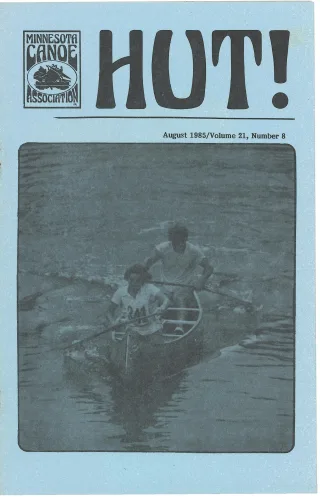
Magazine · 32 pages
Search this issue
August 1985 Magazine (Vol. 21 No. 8)
Captured text — scan page 14
Automatically captured text may contain recognition errors. Compare it with the original scan.
Newsletter of the Whitewater Canoe and Kayak Chapter
Membership: Paul Rem, (612) 645-3538
Safety/Education: Burt Levy, (612) 729-8874
Liaison to the MCA Board: Bek Kragh, (612) 929-9454
Cruising: Mike Pease, (612) 222-3191
Publicity: Rhonda Kuehl, (612) 377-5253
The August Rapid Riders business meeting will be held at the NCR
Comten training facility in Roseville on Tuesday, August 6 at 7:00 p.m. The
address is 2700 North Snelling Avenue. Take the Snelling Avenue exit north
from Highway 36. At County Road C, turn right (east). Go one block to
Snelling Drive and turn left (north). Drive past the parking ramp and turn
right on the drive just past the parking ramp. Follow the drive around the
main building until entering the parking lot for the school (training facility).
Enter the door and ask the guard which room the meeting is in. We hope to
have video equipment available to show the spring whitewater class and the
summer rescue class videotapes.
INTERNATIONAL SCALE OF RIVER DIFFICULTY
‘CLASS I. Moving water with a few riffles and small waves. Few or no
obstructions.
CLASS II. Easy rapids with waves up to three feet, and wide, clear
channels that are obvious without scouting. Some maneuvering is required.
CLASS III. Rapids with high, irregular waves often capable of
swamping an open canoe. Narrow passages that often require complex
maneuvering. May require scouting from shore.
CLASS IV. Long, difficult rapids with constricted passages that often
require precise maneuvering in very turbulent waters. Scouting from shore
is often necessary, and conditions make rescue difficult. Generally not
possible for open canoes. Boaters in covered canoes and kayaks should be
able to Eskimo roll.
CLASS V. Extremely difficult, long, and very violent rapids with
highly congested routes which nearly always must be scouted from shore.
Rescue conditions are difficult and there is significant hazard to life in
event of a mishap. Ability to Eskimo roll is essential for kayaks and canoes.
CLASS VI. Difficulties of Class V earried to the extreme of naviga-
bility. Nearly impossible and very dangerous. For teams of experts only,
after close study and with all precautions taken.
(If rapids on a river generally fit into one of the above classifications,
but the water temperature is below 50 degrees F., or if the trip is an
extended trip in a wilderness area, the river should be considered one class
more difficult than normal.)
HUT! 14
Article contents & approved summaries (0)
No article summaries are available for this view.