Articles (18) · Summaries (18)
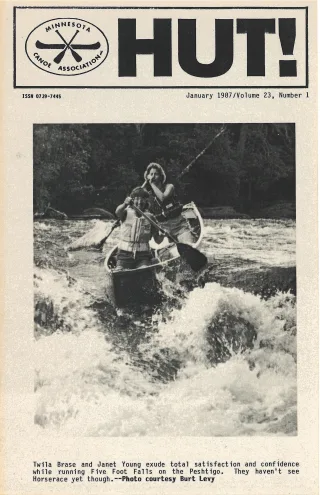
Generated issue overview: January 1987, Volume 23, Number 1 of HUT!, the monthly publication of the Minnesota Canoe Association. The issue includes canoe-safety and canoe-building articles, commentary on canoe selection, chapter news, correspondence, conservation coverage, and association information. The printed issue pagination runs through page 31; OCR also includes unnumbered or insert pages.
Generated summaries are descriptions, not original captured text. Page-range text shows complete scan pages and may include neighboring material.
From the Bow
Title transcribed from original publication
Generated summary: The MCA president greets members for the new year, encourages them to return a survey, and previews MCA classes, events, and the coming canoeing season. He also asks cruise leaders to use the existing trip-planning form.
Open scan page 4
Read captured page 4 →
I'd Rather Be Canoeing - Editorial Comment
Title transcribed from original publication
Generated summary: The editor revisits the debate over which canoe is best, invites member contributions, and urges readers to share trip reports, practical tips, and conservation concerns.
Open scan page 5
Read captured page 5 →
Through the Drowning Machine
Title transcribed from original publication
Generated summary: Sue Hix recounts being pulled under at a flooded low-head dam on the Crow River and surviving after emerging downstream. She describes the incident and gives safety advice about equipment, dam hazards, escaping recirculating water, and seeking medical care after inhaling water.
Open scan page 6
Read captured pages 6–8 →
More on Low-Head Dams
Title transcribed from original publication
Generated summary: James Robinson comments on the Crow River dam incident, describes the Berning Mill dam's danger, and recommends avoiding low-head dam currents and using rope-based rescue rather than attempting a boat rescue.
Open scan page 8
Read captured page 8 →
Cliff's Corner--The One and Only
Title transcribed from original publication
Generated summary: Cliff Jacobson argues that a canoe should be chosen for its intended use rather than expected to serve every purpose. He compares canoe types for cruising, racing, wilderness travel, remote expeditions, and whitewater, and gives examples of suitable boats.
Open scan page 10
Read captured pages 10–11 →
Builders Corner - Gunnels and Other Thoughts
Title transcribed from original publication
Generated summary: Bob Brown recommends keeping canoe trim light and describes the Kunz gunnel system, including wood choices, overlaps, and attachment methods. He also explains a method for filling cracks in a woodstrip canoe during sanding.
Open scan page 12
Read captured pages 12–14 →
Safety and Education
Title transcribed from original publication
Generated summary: George Skinner discusses dressing for changing weather and presents windchill and insulation guidance. He advises against cotton, recommends layers, and says to carry wind pants and a jacket.
Open scan page 14
Read captured page 14 →
Where Are My Building Plans?
Title transcribed from original publication
Generated summary: Bob Brown explains a revised process for handling canoe-plan orders, asks plan buyers to return information about their builds, and directs readers to request a free canoe description sheet.
Open scan page 21
Read captured page 21 →
Duluth Traveler
Title transcribed from original publication
Generated summary: The Twin Ports Chapter newsletter shares a New Year greeting and chapter updates, including winter outings and a slide presentation. The section is identified as the chapter newsletter and signed by its president.
Open scan page 22
Read captured page 22 →
Trip Report
Title transcribed from original publication
Generated summary: George Skinner describes a December outing near Superior National Forest with skiing, snowshoeing, winter camping, and wildlife tracking, and urges readers to support protection of the forest.
Open scan page 24
Read captured page 24 →
Support Your MCA Cruising Director
Title transcribed from original publication
Generated summary: George Skinner responds to a discussion of MCA cruises, noting that a trip-information sheet already exists and encouraging members to lead cruises if they want more trips of a particular kind.
Open scan page 25
Read captured page 25 →
What's in a Name?
Title transcribed from original publication
Generated summary: Brian Larson disputes the terminology used for touring and cruising canoes, argues that paddler size and use affect which canoe is suitable, and comments on how canoe categories apply to MCA trips.
Open scan page 25
Read captured page 25 →
An Invitation for Cliff
Title transcribed from original publication
Generated summary: A brief letter invites Cliff to join a cruise and promises that he will not be left behind.
Open scan page 25
Read captured page 25 →
The Expedition Canoe
Title transcribed from original publication
Generated summary: Bob Brown distinguishes expedition canoes from more common cruising canoes and compares boats suited to whitewater and flatwater expeditions. He discusses capacity, durability, transport, and examples including the Tripper, Mad River TW Special, Beaver, and Sundowner.
Open scan page 26
Read captured pages 26–27 →
Jacobson/Brown -- Who Is Right?
Title transcribed from original publication
Generated summary: James Robinson weighs in on the debate over canoe choice, describing how different boats suit different conditions and arguing that skill, equipment, and enjoyment matter more than finding a single universally best canoe.
Open scan page 28
Read captured pages 28–29 →
Porcupine Caribou Herd in Danger
Title transcribed from original publication
Generated summary: Greg Lais describes the ecological importance of the Arctic National Wildlife Refuge and warns that oil and gas development could harm the Porcupine caribou herd's calving grounds. He urges readers to contact elected officials and provides information about a related slide presentation.
Open scan page 30
Read captured page 30 →
Cruise Notes
Title transcribed from original publication
Generated summary: Bill Simpson comments on the MCA's Arctic canoeing slide series, reports on the progress of an expedition, and describes the high cost of charter flights for a planned Far North trip.
Open scan page 31
Read captured page 31 →
Winter Canoeing
Title transcribed from original publication
Generated summary: Judith Niemi describes canoeing in the Everglades during winter, compares routes and conditions, and provides practical considerations and resources for planning a trip.
Open scan page 33
Read captured page 33 →