← Back to The HUT

March 1987 · Vol. 23 No. 3

March 1987 Magazine (Vol. 23 No. 3)

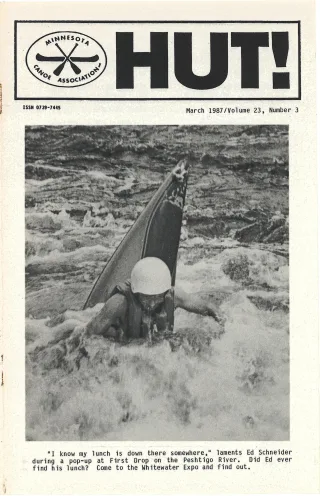
Issue first-page cover

Magazine · 36 pages

March 1987 Magazine (Vol. 23 No. 3)

Captured text — scan page 30

Automatically captured text may contain recognition errors. Compare it with the original scan.

This shows the complete scan page, including any other material on it.

The following article is reprinted from the October, 1982 HUT!
COUNT 16 (OR HIGHER)

As far back as the 1930's, the Seattle Mountaineers discovered
that many miserable, even tragic complications resulted from climbers
going out ill-equipped. Eager to carry the "real important stuff"
like ropes and hardware, unschooled beginners often neglected the
less prestigious items. During their climbing courses, the
instructors drew up a list of necessities and called it "The Ten
Essentials." Toting these became an absolute rule for climbers in
the Mountaineers’ courses. Since then, the Ten Essentials have been
adopted by most high country travelers.

There is no mystery about the Ten Essentials. Most canoe campers
or backpackers with a modicum of common sense already carry them,
modified somewhat to suit the demands of their terrain. At any rate,
here are the Ten Essentials for a day trip, extended to 13 by Tim
Kneeland, Director, Institute for Survival Education.

1. Map and compass -- Know how to use them,

26 Flashlight -- Use alkaline batteries.

36 Small knife -- Leave large “hero" knives at home.

4, Matches and firestarter -- Carry plenty of matches and a couple
of extra candles.

5. First aid kit -- Many lists exist. Carry items that take care
of bleeding, blisters, headaches, etc.

6. Sunglasses, sunscreen, and mosquito repellent -- Protect your
eyes, skin, and body from unnecessary pain.

Te Signalling devices -- Mirror and whistle.

8. Raingear and extra clothing -- T-shirt, gloves and stocking cap

wrapped in plastic. Lightweight woolen undershort and/or long
johns may be added.

9. Shelter material -- A 9' x 11' nylon tarp or 3 mil plastic sheet
works well.

10. Water -- At least one quart.

11. Extra food -- High energy snacks (candy, jerky, or meat bars) to
use during an emergency.
12. Ground pad -- Ensolite, blue or green closed cell foam, etc.

These give instant insulation from the ground. Always carry
this in the winter.

13. Survival kit -- This will give you an ace-in-the-hole. The
above 12 will normally be used while the survival kit is left in
reserve or used for another person.

Most of these items are self-explanatory, but a few comments are
in order.

Flashlights need fresh batteries and a spare bulb, which can be
secreted away in a corner of the first aid kit. Extra food, to be
sealed scurely and left in your pack against an emergency. Dental
floss can be very handy, as can waterproof matches. The knife should
be sharp, too.

Keep this jacket-size stuff with you on all of your outings.
Someday you may find yourself counting to 10 and asking yourself
where you would have been without the Ten (or 13) Essentials.

--Mike Gilman

BACK ISSUES WANTED!

Back issues of HUT! are needed to complete the Archives. The
issues needed from 1985 are: January, February, March, April, May,
September, October, November and December. While we know that many
people like to save their copies, perhaps you would be willing to
part with yours for the benefit of the Association.

22 HUT!

Articles (9) · Summaries (9)

Generated issue overview: March 1987 issue of HUT!, the monthly publication of the Minnesota Canoe Association. The issue includes editorial and canoeing articles, association news, class and event information, chapter newsletters, advertisements, classifieds, and membership materials.

Generated summaries are descriptions, not original captured text. Page-range text shows complete scan pages and may include neighboring material.

From the Bow

Title transcribed from original publication

Generated summary: The author describes fitting canoe racks to a new truck and realizing, after a mishap with the rack, that the truck is ready for canoe season. He closes by inviting readers to paddle.

Open scan page 4

Read captured page 4 →

Worm Cookery

Title transcribed from original publication

Generated summary: A recipe and activity guide for collecting, preparing, and cooking worms in cookies. The instructions describe washing and boiling the worms before mixing them into cookie dough; the page credits Woodlake Nature Center and separately notes distribution by Venice Barsness.

Open scan page 4

Read captured pages 4–5 →

I'd Rather Be Canoeing

Title transcribed from original publication

Generated summary: The editor answers readers' questions about the 1987 membership list, explaining that it will be mailed separately because it is too large for HUT!. He also invites readers to contribute canoe-building tips and points to an advertiser selling canoe strips.

Open scan page 5

Read captured page 5 →

A Matter of Commitment

Title transcribed from original publication

Generated summary: Cliff Jacobson considers whether paddlers should keep remote rivers secret or publicize them to build support for conservation. Using the Gull and Kopka rivers as examples, he argues that committed public advocacy can help protect wild places, while recognizing the competing effects of increased access.

Open scan page 8

Read captured pages 8–9 →

The USCA Cruiser

Title transcribed from original publication

Generated summary: Bob Brown recounts how the USCA Cruiser racing formula was developed and argues that the formula and name have caused confusion about what constitutes a cruising canoe. He distinguishes racing canoes from touring boats and questions the usefulness of the four-inch waterline standard.

Open scan page 10

Read captured page 10 →

Who Needs the Survey?

Title transcribed from original publication

Generated summary: A humorous mock proposal for classifying Minnesota Canoe Association members by canoeing style and canoe ownership, with exaggerated personality sketches for racers, whitewater paddlers, cruisers, designers, and others. The author proposes a group called “Wake of The Grumman” for supposedly normal canoeists.

Open scan page 12

Read captured pages 12–13 →

Rapids Riders/Whitewater Expo

Title transcribed from original publication

Generated summary: A photo feature explains that the Rapids Riders Chapter and Whitewater Expo aim to promote safety, education, and enjoyment. It describes Rob Schmidt and Ruth Ann Zwirtz applying skills from a canoe course on the Peshtigo River and identifies accompanying photos of scouting, rescue support, and a successful run.

Open scan page 20

Read captured page 20 →

Letters to HUT!

Title transcribed from original publication

Generated summary: In response to a previous article about charging fees for cruises, the writer argues that fees would add bureaucracy and discourage participation. He compares leading a cruise to inviting people to a party and says participants should remain free to join or not.

Open scan page 28

Read captured page 28 →

Count 16 (or Higher)

Title transcribed from original publication

Generated summary: Reprinted safety advice for canoe campers and backpackers, expanding the traditional Ten Essentials into a list of thirteen items. It describes equipment such as navigation tools, first aid, clothing, shelter, water, food, and a survival kit.

Open scan page 30

Read captured page 30 →