
December 1987 · Vol. 23 No. 12
December 1987 Magazine (Vol. 23 No. 12)
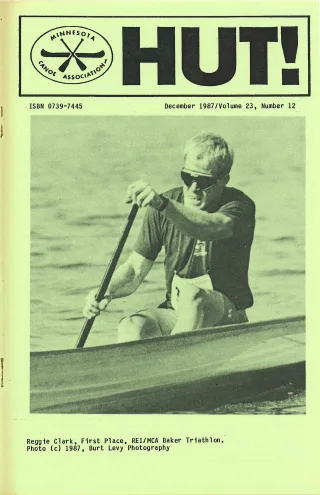
Magazine · 32 pages
Search this issue
December 1987 Magazine (Vol. 23 No. 12)
Captured text — scan page 27
Automatically captured text may contain recognition errors. Compare it with the original scan.
I have steered folks wrong on this point in the past. Should you
have crystalized resin, try warming it up to 120 degrees F, stirring
it with a clean stick, then inverting the can to melt any crystals
off the cover,
We make every attempt to provide you, the customer with fresh
resin, don't store it forever and expect it to be good.
A friend of mine is a chemist by trade. In his duties he has
worked some with epoxy adhesives. He advised me on the importance of
mixing thoroughly. He said be sure to scrape the sides of the mixing
pot as the hardener will sometimes end up stuck to the side of the
pot rather than mixed in. Don't get violent as this wipes air into
the resin, but be thorough.
He also suggested holding the pot until the resin begins to warm
slightly in the pot. This has to shorten the pot life, but this
warming will reduce the viscosity of the resin allowing the molecules
to realign freely, thereby developing a better cure.
Hopefully sometime soon, we will be able to offer a builders
corner written by a chemist. This would remove much of the guesswork
that we have been going by.--Bob Brown
BUILDERS CORNER--USING LESS THAN PERFECT WOOD
In September and October of 1987, I stripped up three canoes,
I learned a couple things that I'd like to share,
‘It seems that no one cuts cedar trees taller than 16 feet. I have
only found 16 foot stuff and no clear lumber.
I bought lumber from Scherer Bros. Lumber in NE Minneapolis for
boats 21 and 22. I paid $128 for enough boards to build these two
boats. I rummaged through their pile of 1 X 6's, selecting only the
best from the entire pile.
As I sawed my strips I set all the perfect ones into one pile and
anything with any defect into a different pile. By the time I
finished sawing, I realized that the two piles were about equal size.
On boat 23, I pougnt strips from St. Croix Canoe Company. I paid
about a dollar per strip for the ready-cut stuff. I sorted through
them, bunching them according to color variations and set aside any
that were not perfect. Out of 80 strips, I had 26 with a knot or
ding or something leaving it less than perfect. Not good but
definitely better than the lumber that I had bought and sawed myself.
OK, now what am I going to do with all the knotty lumber? I
don't Jike to put knots into the hull], it can be done, but they can
cause problems glassing and they invariably cause a bump at the knot,
My answer is to break each strip at the knot and then lay out the
short pieces arranging them according to their new lengths. Now as I
build I can go to this pile and find a piece that is just long enough
to do the job. By doing this, very little goes to waste.
The way you Jay up a canoe will determine how many full length
strips you will need and how often you can fit in shorter pieces.
My good friend, Martin Van, (Eau Galle Boat Shop) strips canoes
following the procedure discussed in the book "Canoe Craft." Using
this technique, nearly al} the strips run full length in his boats.
I don't build canoes that way. I prefer to strip the way I was
taught by the MCA a few years ago. I prefer to lay up the sides with
horizontal full-length stuff and fill] in the ends and football area
with shorter pieces.
Qur new book suggests a system that we recommmend for stripping
most canoes. The first strip layed on either side is the shear line.
The next one wil] touch this shear strip in the center of the boat,
but it will be installed horizontally. See figure 1. The area
between these strips will be filled in later with short stuff.
BUILDING-~CONTINUED ON PAGE 28
December 1987-HUT! 27
Article contents & approved summaries (0)
No article summaries are available for this view.