
October 1984 · Vol. 20 No. 10
October 1984 Magazine (Vol. 20 No. 10)
Magazine · 16 pages
Search this issue
For the full-resolution original, use Open PDF above. Your browser handles PDF zoom and navigation.
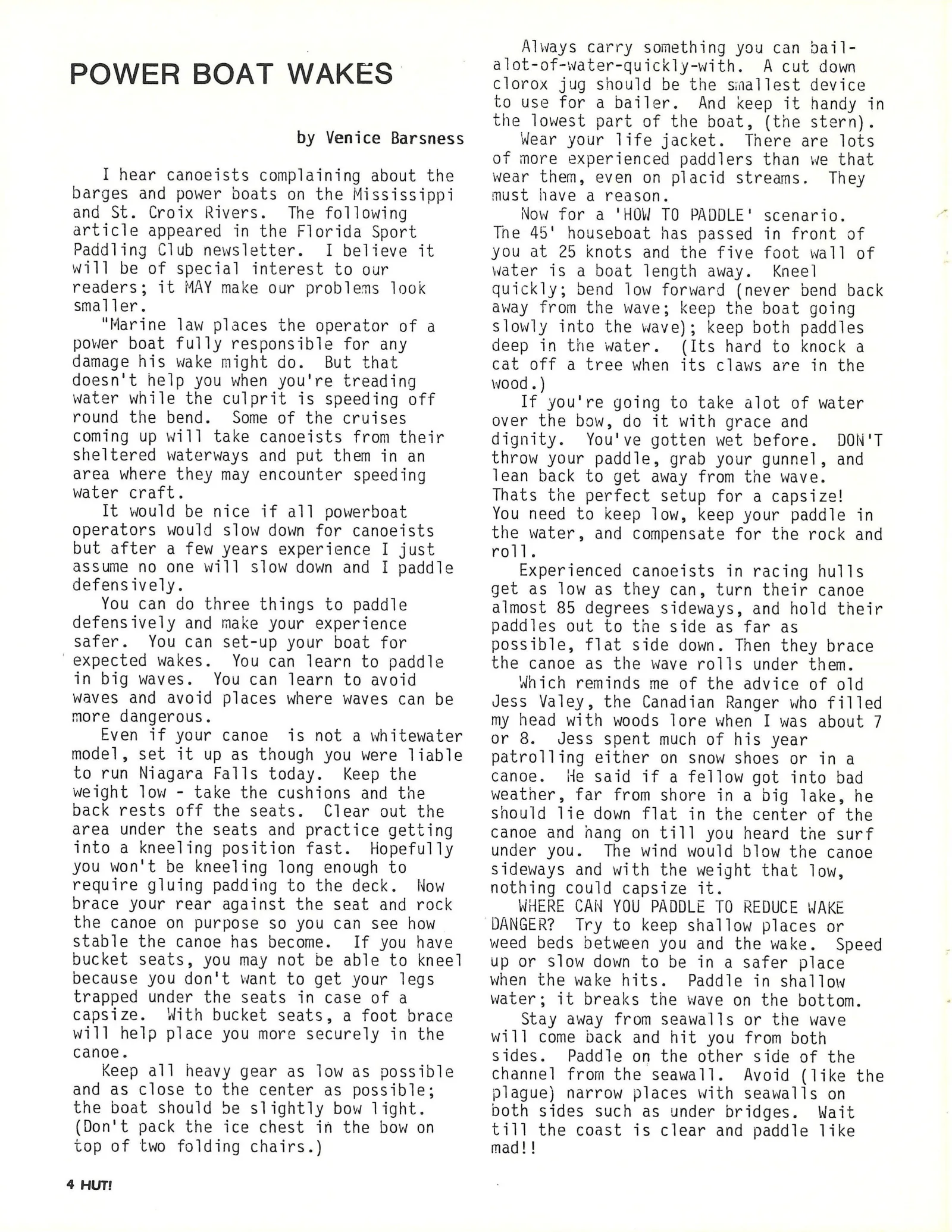
Searchable text for scan page 4
Always carry something you can dail-
OAT WAKES| alot-of-water-quickly-with. A cut down
POWER B clorox jug should be the sinallest device
to use for a bailer. And keep it handy in
the lowest part of the boat, (the stern).
by Venice Barsness Wear your life jacket. There are lots
of more experienced paddlers than we that
I hear canoeists complaining about the wear them, even on placid streams. They
barges and power boats on the Mississippi must have a reason.
and St. Croix Rivers. The following Now for a 'HOW TO PADDLE' scenario.
article appeared in the Florida Sport The 45' houseboat has passed in front of
Paddling Club newsletter. I believe it you at 25 knots and the five foot wall of
will be of special interest to our water is a Doat length away. Kneel
readers; it MAY make our problens look quickly; bend low forward (never bend back
smaller. away from the wave; keep the boat going
“Marine law places the operator of a Slowly into the wave); keep both paddles
power boat fully responsible for any deep in the water. (Its hard to knock a
damage his wake might do. But that cat off a tree when its claws are in the
doesn't help you when you're treading wood . )
water while the culprit is speeding off If you're going to take alot of water
round the bend. Some of the cruises over the bow, do it with grace and
coming up will take canoeists from their dignity. You've gotten wet before. DON'T
sheltered waterways and put them in an throw your paddle, grab your gunnel, and
area where they may encounter speeding lean back to get away from the wave.
water craft. Thats tne perfect setup for a capsize!
It would be nice if all powerboat You need to keep low, keep your paddle in
operators would slow down for canoeists the water, and compensate for the rock and
but after a few years experience I just roll.
assume no one will slow down and I paddle Experienced canoeists in racing hulls
defensively. get as low as they can, turn their canoe
You can do three things to paddle almost 85 degrees sideways, and hold their
defensively and make your experience paddles out to the side as far as
safer. You can set-up your boat for possible, flat side down. Then they brace
expected wakes. You can learn to paddle the canoe as the wave rolls under them.
in big waves. You can learn to avoid Which reminds me of the advice of old
waves and avoid places where waves can be Jess Valey, the Canadian Ranger who filled
more dangerous. my head with woods lore when I was about 7
Even if your canoe is not a whitewater oor 8. Jess spent much of his year
model, set it up as though you were liable patrolling either on snow shoes or ina
to run Niagara Falls today. Keep the canoe. He said if a fellow got into bad
weight low - take the cushions and the weather, far from shore in a Dig lake, he
back rests off the seats. Clear out the snould lie down flat in the center of the
area under the seats and practice getting canoe and nang on till you heard the surf
into a kneeling position fast. Hopefully under you. The wind would blow the canoe
you won't be kneeling long enough to sideways and with the weight that low,
require gluing padding to the deck. Now nothing could capsize it.
brace your rear against the seat and rock WHERE CAN YOU PADDLE TO REDUCE WAKE
the canoe on purpose so you can see how DANGER? Try to keep shallow places or
stable the canoe has become. If you have weed beds between you and the wake. Speed
bucket seats, you may not be able to kneel up or slow down to be in a safer place
because you don't want to get your legs when the wake hits. Paddle in shallow
trapped under the seats in case of a water; it breaks the wave on the bottom.
capsize. With bucket seats, a foot brace Stay away from seawalls or the wave
will help place you more securely in the will come back and hit you from both
canoe. sides. Paddle on the other side of the
Keep all heavy gear as low as possible channel from the seawall. Avoid (like the
and as close to the center as possible; plague) narrow places with seawalls on
the boat should be slightly bow light. both sides such as under bridges. Wait
(Don't pack the ice chest in the bow on till the coast is clear and paddle like
top of two folding chairs.) mad!!
4 HUT!
Article contents & approved summaries (0)
No article summaries are available for this view.