
October 1976 · Volume/issue not printed or unknown
October 1976 Supplement
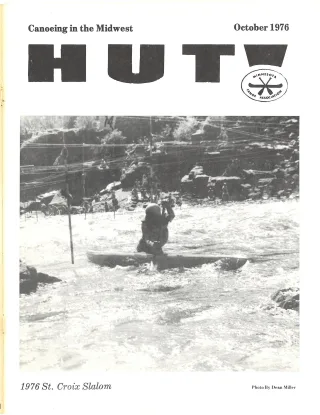
Supplement · 40 pages
Search this issue
October 1976 Supplement
Captured text — scan page 27
Automatically captured text may contain recognition errors. Compare it with the original scan.
What is Congress
Why the present doing about these
controversy? - problems’
In 1964 Congress passed the Wilderness Act. This legisla~- Almost everyone now. recognizes that new legislation is
tion established a National Wilderness Preservation System essential to better define the appropriate uses of the
and set guidelines for its management. The Boundary BWCA. Several legislative proposals have been prepared,
Waters was made a unit of this system. The U.S. Forest and two bills have already been introduced in Congress.
Service continued to manage the National Forest units of Representative James Oberstar’s (Dem-Mn., 8th Dist.)
that system. bill would change the classification of approximately
In the language of the Wilderness Act, the System was to 400,000 acres from “Wilderness” to “National Recreation
provide areas “where the earth and its community of life Area,” thus removing it from the National Wilderness
are untrammeled by man, where man himself is a visitor Preservation System. A National Recreation Area, as
who does not remain . .. retaining its primeval character defined by the Forest Service, would allow a gradient of
_ managed to preserve its natural conditions ... where "ecreational experience levels from primitive to highly
the imprint of man’s work is substantially unnoticeable.” developed. Under this proposal large sections of the area
might be given over to paved roads and resort develop-
ment. Commercial logging, road-building and motorized
recreation would be allowed in the NRA. Current prohibi-
tions on mining and the use of airplanes — both hard won
victories — would be uncertain and perhaps lifted. Such
beautiful lakes as Lac La Croix, Saganaga, Basswood, Big
Trout, Gabbro, Bald Eagle, Brule, Duncan, Rose, Moun-
tain, Pine and Alder would be removed from the wilderness
Thus, the Forest Service was asked to manage the area system and transferred to the NRA. The proposed removal
as wilderness while at the same time accommodating log- of these areas from wilderness status seems to be aimed
ging and motorized users. These contradictory purposes mainly at accommodating existing motor use. Rep. Ober-
have been at the heart of many law suits, administrative star’s proposed designation of 600,000 acres as full wilder-
appeals, public hearings, and mass-meetings since 1964. ness is a positive step, but the transfer of 400,000 acres to
This dilemma has become a nightmare to the Forest Serv- NRA status is unacceptable to conservationists.
ice and conservationists alike..Commercial logging is not Only 0.5 percent of the United States is preserved as
permitted ‘in any other unit of the National Wilderness wilderness. Mr. Oberstar’s proposal would decrease the
System. But in the BWCA logging and road-building are total wilderness acreage in the eastern United States by 20
destroying the last large virgin wilderness in the eastern percent. Counting the BWCA, the average eastern Wilder-
United States, and motorboat and snowmobile use are ness Area is 40,500 acres. The Oberstar proposal would
destroying the sense of peace and solitude in large portions eliminate the equivalent of almost 10 such wilderness
of the area. Mining remains an ever-present threat. areas for people living east of the Rockies.
Beneath this fine language, however, is Section 4(d)(5), a
qualifier tacked on to apply only to the BWCA to satisfy
local timber and motorboat interests. Section 4(d)(5)
requires that the BWCA be managed to retain its primitive
character but “without unnecessary restrictions on other
uses, including that of timber.” It also allowed “any
already established use of motorboats.”
J. Arnold Bolz Photo — Naturalist Magazine
3
Article contents & approved summaries (0)
No article summaries are available for this view.