← Back to The HUT

October 1976 · Volume/issue not printed or unknown

October 1976 Supplement

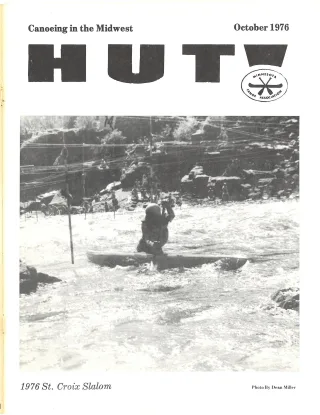
Issue first-page cover

Supplement · 40 pages

October 1976 Supplement

Captured text — scan page 35

Automatically captured text may contain recognition errors. Compare it with the original scan.

Why not log if if fire is nature's
the trees will way, why not log
die anyway? === and then burn?

It is true that you cannot literally “preserve” a tree, forest, Logging followed by fire has far different ecological

or even a whole stand of trees of one particular age class. effects from fire in the natural standing virgin forest. For

But the goal of wilderness preservation is not to literally example, if red pine, white pine, jack pine or black spruce

“save’’ individual trees, but rather to maintain and restore’ are cut for timber first, when the slash-covered land is

complete natural ecosystems — the dynamic mosaic of burned over their seeds are destroyed, and it is then

plant communities, wildlife habitats, and animal popula- necessary to artificially re-seed or re-plant if these trees are

tions of a natural region. In the BWCA, fire was the key _ to be regenerated. If this is not done, the area will be taken

environmental factor in the primeval ecosystem that main- over by aspen and birch. In nature, jack pine and black

tained the diversity of vegetation and animal populations, spruce seeds are stored in closed or semi-closed cones

regenerated old forests, recycled nutrients and accounted which open and re-seed the area after the fire’s heat has

for the long term stability of the system. This was also true unsealed their resin coating. Red and white pine are very

of the ecosystems of most of our best-known western fire resistant, and ‘seed-trees’’ usually escape the fire to

Wilderness Areas and National Parks. Modern wilderness regenerate their kind. When a stand is burned after log- |
and park management programs are developing methods — ging, the nutrients. in the mature trees, which would have

to restore fire to its natural role in such areas. Logging been recycled by fire, are lost to the system in the timber
mature forests is not a solution. It will only create a badly _ that is carted off. In addition, herbicides have often been

manipulated and disturbed ecosystem. In the BWCA, the used in the BWCA after seeding or planting to kill the
replacement of conifer forests by aspen and birch and the deciduous trees which quickly grow up and shade the
labyrinth of old logging roads are graphic demonstrations Planted pine. The herbicide used is a combination of 2-4-D
of how human manipulation creates change in the ecosys- and 2-4-5-T, herbicides found to cause birth defects. If we
tem. The ecological principles are the same in the BWCA __ use logging before fire to manage the BWCA, there is no
as in Yellowstone, Glacier, or Sequoia National Parks or Way all the interactions of the natural ecosystem can be
the Bob Marshall and Selway-Bitterroot Wilderness Areas. duplicated. Although this type of forestry is proper in a
If we must log the BWCA to “save” its forests as the timber | ™anaged forest or “tree farm” it is clearly out of place in a
industry claims, then we must also log Yellowstone, Wilderness.

Sequoia, and all the rest! The proof that the virgin forests
and wildlife of the BWCA can persist without logging is
that they are still there after 10,000 years of natural
development.

>
«

by

a

U.S.F.S. Photo — Raymond Naddy Naturalist Magazine

Wilderness, properly administered, will provide prey for this magnificent Fire scars on old pines record a history of periodic natural fires that helped
symbol of the northern wilderness. : maintain open areas and food for moose, beaver, grouse and other wildlife.

lj

Articles (10) · Summaries (10)

Generated issue overview: An October 1976 Minnesota Canoe Association HUT newsletter issue accompanied by a substantial Friends of the Boundary Waters Wilderness educational pamphlet advocating stronger wilderness protections for the Boundary Waters Canoe Area. The newsletter includes association news, canoeing and boatbuilding material, event information, racing results, and membership forms.

Generated summaries are descriptions, not original captured text. Page-range text shows complete scan pages and may include neighboring material.

THE EDITOR SAYS

Title transcribed from original publication

Generated summary: The editor comments on the delayed arrival of the September HUT, attendance at the St. Croix Color Cruise and Builder’s Contest, and the contents and upcoming activities covered in the issue. He invites members to send in photographs, comments, opinions, and articles.

Open scan page 3

Read captured page 3 →

MCA member’s input requested: Kettle River user study

Title transcribed from original publication

Generated summary: The University of Minnesota College of Forestry is studying use and user preferences on the Kettle River. The notice asks selected MCA members to complete a questionnaire and invites other interested members to request one.

Open scan page 3

Read captured page 3 →

Grand Portage Rendevous

Title transcribed from original publication

Generated summary: The article recounts the Brigade of the North’s participation in the Grand Portage Rendezvous and Indian Pow Wow. It describes the event and reports that the Brigade won the large-canoe race; John Wheeler and Tom Babcook won the two-person canoe race.

Open scan page 5

Read captured page 5 →

November Activity Meeting: Handicraft Show

Title transcribed from original publication

Generated summary: An announcement invites members and friends to a November display and contest of sporting equipment, handicrafts, inventions, art, and photography. It provides the meeting time, location, and contest guidelines.

Open scan page 6

Read captured page 6 →

How to Fiberglass a Canoe Paddle

Title transcribed from original publication

Generated summary: A practical guide to reinforcing a canoe paddle blade with fiberglass and epoxy. It lists materials and describes preparing, layering, wetting, positioning, and finishing the cloth and roving, with separate advice for a lighter-duty paddle.

Open scan page 7

Read captured pages 7–8 →

Give Your Wood Strip a Beauty Mark

Title transcribed from original publication

Generated summary: Lew Miller describes repairing a wind-damaged redwood-and-spruce strip canoe. He explains removing damaged fiberglass, replacing a damaged strip section, refinishing the hull, and reflecting humorously on the canoe’s visible repair marks.

Open scan page 10

Read captured page 10 →

Mississippi Mud: Minnesota Marathon Canoe Racing Point System

Title transcribed from original publication

Generated summary: This report explains the 1976 marathon canoe racing point system: eight sanctioned races were held, with each paddler’s best five results counted. It describes the points awarded, class participation, and the overall standings.

Open scan page 14

Read captured page 14 →

Tips on Building Whitewater Boats

Title transcribed from original publication

Generated summary: A continuation of an earlier article on building whitewater boats. The available text discusses a timed procedure for molding, trimming, clamping, and seaming a kayak, along with epoxy safety precautions and advice about commercial whitewater boats.

Open scan page 15

Read captured pages 15–18 →

You need not be a lonely canoeist

Title transcribed from original publication

Generated summary: Ketter explains how local MCA chapters can make the association’s activities and services more accessible to members outside the Twin Cities. He describes chapter formation, member participation, representation on the MCA board, and financial support for chapters.

Open scan page 19

Read captured page 19 →

Your Boundary Waters Canoe Area Wilderness needs help, NOW!

Title transcribed from original publication

Generated summary: An advocacy pamphlet presents the Boundary Waters Canoe Area as an endangered wilderness and urges stronger congressional protection. It discusses the area’s ecological and recreational value, its preservation history, logging, motor use, snowmobiles, mining, and competing Fraser and Oberstar proposals; it promotes the Fraser bill to designate the full area as wilderness.

Open scan page 21

Read captured pages 21–40 →